Ten US Destinations That Have Always Attracted Old Money
There is a version of American wealth that does not announce itself. It does not move to wherever is fashionable this season or follow the conversation online. It returns, year after year, to the same places — because those places have earned that loyalty over generations and because the people who matter there already know each other.
These are ten of those places.
Atherton, California
Most people could not place Atherton on a map, which is precisely how its residents prefer it. A small, incorporated town on the San Francisco Peninsula with no shops, no restaurants, and no particular interest in being discovered, Atherton is consistently ranked the wealthiest zip code in the United States. Its residents are disproportionately drawn from the upper reaches of Silicon Valley — founders, early investors, and the kind of generational tech wealth that has had long enough to start behaving like old money. The houses sit behind hedgerows on large private lots and the streets are quiet in a way that only significant money can sustain.
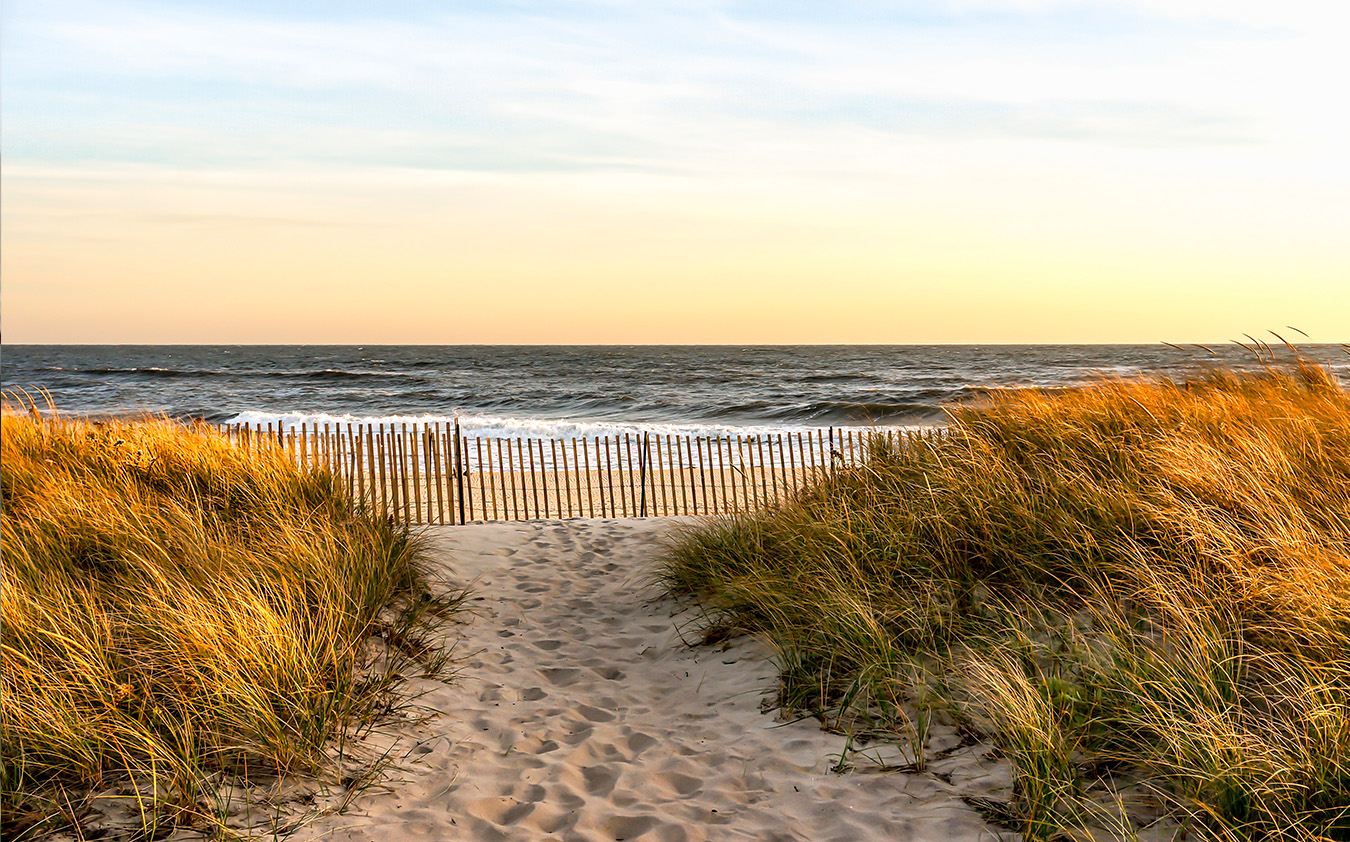
The Hamptons, New York
The Hamptons have been the summer address of choice for wealthy East Coast families since the nineteenth century, which means the social architecture here runs deep. Southampton and East Hampton carry the oldest money — families who have held the same properties across multiple generations and who treat the season as a continuation of a ritual rather than a holiday. The further east you go, the quieter it becomes. Bridgehampton, Sagaponack, and Wainscott are the addresses that serious money has been moving toward for years, away from the circuit and toward something considerably more private.
Palm Beach, Florida
Palm Beach operates as a self-contained world. The island is three miles wide, accessible by three bridges, and has functioned as the winter address of American establishment wealth for well over a century. Worth Avenue, the private clubs, the charity circuit, the estates along South Ocean Boulevard — all of it runs on a social calendar that predates most of the families now participating in it. It is one of the few places in America where new money genuinely has to earn its place, and where the oldest families have no interest in accelerating that process.
Greenwich, Connecticut
Greenwich has been the preferred address of Wall Street’s upper tier for decades — close enough to Manhattan to be practical, far enough to feel entirely separate. The backcountry, as the northern residential area is known, contains some of the most significant private estates on the East Coast, largely invisible from the road and entirely invisible to anyone who has not been invited. Hedge fund wealth built much of what Greenwich is today, but the town’s roots go considerably further back, and the two layers coexist with a mutual understanding that privacy is the primary currency.
Montecito, California
Montecito sits just east of Santa Barbara and has been attracting a specific calibre of resident for most of the last century. It is not Beverly Hills — it has no interest in visibility or industry adjacency. The estates here are large, the gardens exceptional, and the general atmosphere one of considered withdrawal from everything louder. It has gained a higher public profile in recent years through certain high-profile arrivals, but the families who matter in Montecito were there long before and will be there long after. The local saying is that you move to Santa Barbara, but you arrive in Montecito.
Naples, Florida
Naples is Florida’s quieter alternative to Palm Beach — less visible, less discussed, and for that reason increasingly preferred by the kind of wealth that has grown tired of being observed. The Gulf Coast setting means calmer water, better beaches by many measures, and a residential community that skews toward Midwestern industrial and agricultural money that came to Florida and never left. The private clubs here are genuinely exclusive in the original sense of the word, and the social life for those who know where to find it is considerable.
Aspen, Colorado
Aspen’s reputation as a luxury resort town sometimes obscures what it actually is for the families who have been coming for forty years — a genuine community with deep roots, serious cultural institutions, and a winter rhythm that has nothing to do with the crowd that arrives in December. The old Aspen money owns the houses it has always owned, skis the runs it has always skied, and regards the seasonal influx with the patient tolerance of people who know the town will return to itself in April. Summer in Aspen, for those who know it, is an entirely different and considerably more interesting proposition.
Malibu, California
Malibu’s twenty-seven miles of coastline contain a remarkably diverse range of wealth, from the Colony — one of the most expensive stretches of beachfront property in the world — to the quieter canyons inland where the money is older and considerably less interested in the ocean view. What Malibu has always offered is space and informality at a level that Los Angeles proper cannot provide. The estates here are serious but the dress code is not, which has always made it attractive to a certain kind of wealthy Californian who wants the property without the performance.
Newport Beach, California
Newport Beach is Southern California’s answer to the Hamptons — a harbour town built around boats, private clubs, and a social structure that rewards longevity over arrival. The Balboa Peninsula and the island communities within the harbour contain some of the most sought-after residential addresses in California, and the yachting culture here is genuine rather than decorative. Old Newport families measure their connection to the place in decades and the Yacht Club membership list reads accordingly.
Bel Air, California
Bel Air sits above Beverly Hills and has always attracted a quieter, more residential version of Los Angeles wealth — the kind that has no need for the street-level visibility that Beverly Hills provides and no interest in acquiring it. The gated community at its centre is one of the oldest in Los Angeles and the estates within it represent a cross-section of entertainment, industry, and inherited wealth that has been accumulating here since the 1920s. It remains one of the few addresses in Los Angeles where the houses are rarely photographed, not because they are modest, but because their owners prefer it that way.
These are not destinations that trend. They do not appear on lists of emerging neighbourhoods or feature in articles about where to go next. They have been where they are, doing what they do, for long enough that the question of whether they are still relevant has stopped occurring to the people who matter most within them.
BC provides lifestyle management, travel coordination, and private concierge services for clients across all ten locations. Enquiries through the usual channel.