Best Concierge Services in Monaco: What Should UHNW Clients Look For?
Monaco is barely two square kilometres, and that single fact explains most of what makes it difficult. The Principality packs some of the world’s most sought-after hotels, restaurants, residences and harbour space into a strip of steep coastline between the mountains and the sea, and in the weeks when the world arrives there is simply nowhere else to put anyone. A suite, a table, a berth or a terrace overlooking the circuit cannot be conjured from somewhere down the road, because down the road is France. At the same time, Monaco is rarely the whole of a client’s stay. For most UHNW visitors and residents, it sits within a wider Riviera life that runs from Saint-Tropez to the Italian border.
The best concierge service in Monaco is therefore the one that understands both the compression and the context. It knows how the Principality works across its different levels and districts, how to arrive through Nice and when a helicopter is worth it, what the major event weeks do to availability, and how Monaco relates to the villas, harbours and hotels of the coast around it. A concierge whose Monaco knowledge begins with the Grand Prix and ends with the Yacht Show does not know Monaco particularly well. This article sets out what the knowledge should look like.
A Very Small Place
Monaco’s districts are close together, but each has its own character, and within them the difference of a few hundred metres, or a few levels of hillside, can matter a great deal.
Monte-Carlo
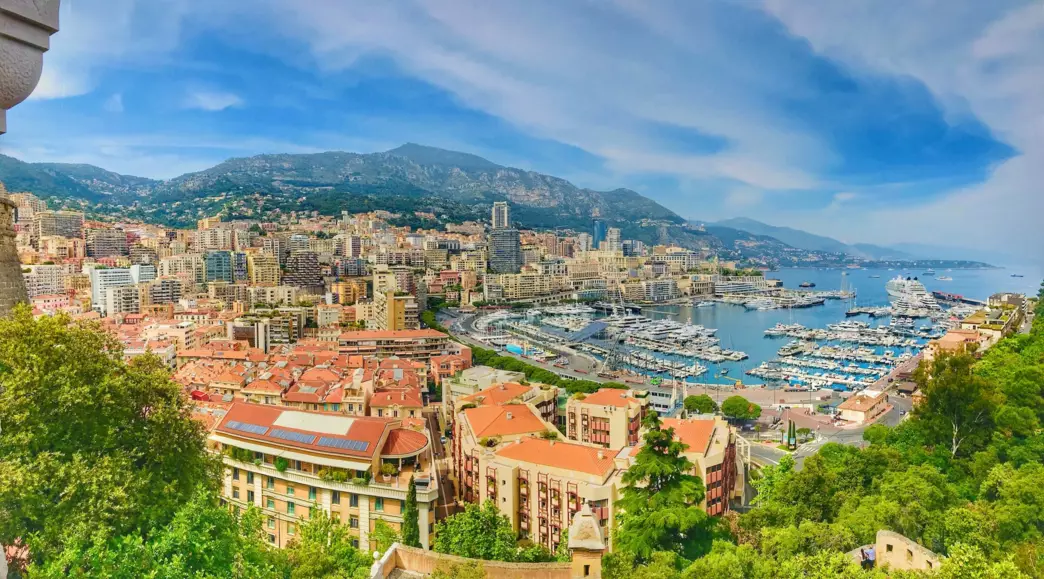
Monte-Carlo is the Monaco of the imagination. The Casino, the Hôtel de Paris and the Hôtel Hermitage surround the Place du Casino, with the Café de Paris, the boutiques of the Avenue des Beaux-Arts and the One Monte-Carlo complex close by. It is the social centre of the Principality and the heart of its most famous evenings. It is also where the pressure of event weeks is felt most intensely, since so much of what visitors want sits within a few minutes’ walk of the square.
The Port, the Rock and Fontvieille
Below Monte-Carlo, La Condamine wraps around Port Hercule, the principal harbour, where superyachts berth beside the Yacht Club de Monaco and the circuit runs along the quayside during the Grand Prix. Above it rises the Rock, Monaco-Ville, with the Prince’s Palace, the cathedral and the Oceanographic Museum. On the other side of the Rock lies Fontvieille, built largely on reclaimed land, with its own marina, the Stade Louis II and the heliport that connects Monaco with Nice.
Larvotto and the Eastern Shore
To the east, Larvotto has Monaco’s public beach, beachfront hotels and residential buildings, along with the Principality’s newest district, built on land reclaimed from the sea. Beyond the border, the Monte-Carlo Beach hotel and the Monte-Carlo Country Club sit in Roquebrune-Cap-Martin, technically in France but part of Monaco’s social world. That blurring of borders is typical: much of what a client thinks of as Monaco extends a little way into the neighbouring French communes.
Levels, Lifts and Moving Around
Monaco is built vertically as much as horizontally. Its streets climb steeply from the harbour to the upper districts, and a network of public lifts, escalators and walkways connects the levels. Knowing where these are can turn a steep ten-minute climb into a two-minute ride. For many journeys within the Principality, walking is the quickest and most pleasant option, and a car can be slower than it seems. Roads are narrow, parking is limited and traffic builds quickly in season.
Getting in and out is a different matter. The coast roads, the Basse, Moyenne and Grande Corniches, and the A8 motorway above them all funnel traffic into a small number of approaches. At busy times, particularly on event weekends and summer evenings, those approaches congest heavily. A concierge who knows Monaco will plan road journeys around these pinch points, and will know when a helicopter, a boat or simply leaving earlier is the better answer.
Arriving: Nice, Helicopters and the Road
Monaco has no airport of its own. Most clients arrive through Nice and complete the journey by road or helicopter.
| Route | Character | Often suited to |
|---|---|---|
| Nice Côte d’Azur Airport | The Riviera’s principal international airport, handling commercial and private aviation | Almost all arrivals to Monaco, commercial and private |
| Helicopter from Nice to Monaco | Short flight to the heliport at Fontvieille, subject to weather and scheduling | Clients who want to avoid the coast road, particularly at busy times |
| Road from Nice | Around half an hour in light traffic, considerably longer at peak times | Most arrivals outside event periods, and clients travelling with substantial luggage |
| Cannes-Mandelieu | Business aviation airport to the west, suited to smaller private aircraft | Clients based around Cannes or the western Riviera |
The helicopter transfer from Nice is one of the defining features of arriving in Monaco. It takes only a few minutes and turns what can be a slow drive into a brief, spectacular approach. It is still not always the right answer. Weather can affect flights, luggage and larger parties may be better served by road, and on quieter days the drive can be almost as quick door to door. During the Grand Prix and other major weeks, helicopter capacity is itself under pressure, and arrangements need confirming well ahead. A good concierge will set out the realistic options for each arrival rather than assuming the helicopter is always best.
When Monaco Is Full
Monaco’s year has a handful of weeks when the Principality is effectively full, and a wider season that runs from spring to early autumn. The occasions below show how sharply demand moves. They are only the most visible part of Monaco’s calendar, which also includes private dinners, charity galas, yacht gatherings, residents’ events and invitation-only evenings that never appear in public listings.
| When | Illustrative occasions | What changes across Monaco |
|---|---|---|
| January | The Monte-Carlo Rally, winter residents’ season | Monaco is quieter, and local life dominates |
| April | The Monte-Carlo Masters tennis at the Country Club | The eastern edge of the Principality and nearby hotels fill |
| Spring | The Bal de la Rose, the start of the season | Social demand rises and the harbour begins to fill |
| Late May and early June | The Monaco Grand Prix, often close to the Cannes Film Festival | Hotels, berths, terraces, restaurants, helicopters and cars are at maximum pressure along the whole coast |
| July and August | High summer, the Red Cross Gala and summer evenings at the Sporting | Beach clubs, restaurants, yachts and villas along the Riviera are in constant demand |
| Late September | The Monaco Yacht Show | Port Hercule fills with superyachts, and hotels are taken by the yachting world |
| October to December | The quieter season | Residents return to the rhythm of the Principality and availability eases |
The practical consequence is that the same request can be simple in November and nearly impossible in late May. In a city of normal size, a full hotel can be replaced with another a short drive away. In Monaco, the alternative may be in Nice, Cap Ferrat or Menton, with a road journey that event traffic makes unpredictable. Understanding that compression is the single most important piece of Monaco knowledge.
The Grand Prix
The Grand Prix deserves particular attention, because it reshapes the Principality more completely than any other event. The circuit is built through the streets in the weeks beforehand, and during race days roads close, familiar routes disappear and even walking between districts can require planning. Hotel rooms overlooking the circuit, terraces and balconies, hospitality and yacht berths in Port Hercule are among the most sought-after places to be in the sporting world, and much of that inventory is committed well in advance.
Billionaire Concierge’s experience of Formula 1 hospitality is that the work begins long before race weekend, and nowhere is that truer than in Monaco. The important questions are practical as well as glamorous. Where will the client stay if not in Monaco itself? How will they arrive each day when the roads are closed? Which days matter to them? What happens in the evenings, when the Principality’s restaurants and clubs are at their fullest? A concierge who can answer those questions will serve a client far better than one who has simply secured a ticket.
Yachts, Berths and the Port
For many UHNW clients, Monaco is experienced from the water. Port Hercule and Fontvieille provide berths in the heart of the Principality, but space is limited, and during event weeks it is intensely sought after. Many yachts anchor offshore and use tenders to come ashore, which brings its own considerations of weather, timing and access to landing points. A yacht positioned for the Grand Prix is effectively a private grandstand and a floating residence at once, but only if the berth, the provisioning, the crew and the guests’ comings and goings have all been planned carefully.
Beyond the event weeks, Monaco is a natural base for cruising the Riviera, from Cap Ferrat and Villefranche to Saint-Tropez and the Italian coast. A capable concierge understands which vessels suit which occasions, how the weather along the coast affects plans, and how a yacht fits into the rest of a client’s stay rather than sitting apart from it.
Monaco and the Riviera
For most UHNW clients, Monaco is one part of a wider Côte d’Azur life. Understanding how it connects to the coast around it is as important as understanding the Principality itself.
Cap Ferrat, Beaulieu and Villefranche
To the west, Saint-Jean-Cap-Ferrat holds some of the most private villas on the Mediterranean, alongside the Grand-Hôtel du Cap-Ferrat. Beaulieu-sur-Mer and Villefranche-sur-Mer, with its deep natural harbour, complete one of the most beautiful stretches of the coast. Many clients who spend time in Monaco prefer to stay here. They have Monaco close at hand but enjoy more space and privacy, which suits families and longer stays in particular.
Cannes, Antibes and Saint-Tropez
Further west, Cannes, Cap d’Antibes and Saint-Tropez each have their own seasons and their own social worlds. Cap d’Antibes is home to the Hôtel du Cap-Eden-Roc and grand private villas, Cannes has its festivals and harbour, and Saint-Tropez’s summer is famous in its own right. By road these places can be a long way from Monaco in summer traffic. By helicopter or by sea they become part of the same stay.
Menton and the Italian Riviera
To the east, Menton sits at the French border, and beyond it the Italian Riviera begins. For clients with a yacht or a car and driver, lunch in Italy is a natural extension of a Monaco stay, and the coast further towards Portofino offers a different kind of Mediterranean altogether.
Residence, Privacy and Discretion
Monaco is home to a remarkable concentration of wealth for its size, and much of its life is private. Residents live in apartments rather than grand estates, and property is among the scarcest in the world. For visitors, that means the choice is usually between Monaco’s hotels and the villas of the surrounding coast. For residents, it means that household logistics, staff, deliveries, cars and storage all operate within tight physical constraints.
Discretion is part of the Principality’s culture. Monaco is well policed and widely regarded as exceptionally safe, but that does not remove the need for thoughtful planning for high-profile clients, particularly in event weeks when the world’s cameras are present. Evening venues often have clear expectations of dress and conduct. French is the official language, Italian is widely spoken, and English is common in hospitality, but a concierge with genuine local relationships will know how to navigate the Principality’s more formal side.
What Visitors Commonly Misunderstand
Several Monaco realities catch visitors out. The Principality is so small that when it is full there are no nearby alternatives within its borders, and the nearest options may be a slow drive away in event traffic. Monaco is a separate state from France, although the border is barely noticeable, and some of what feels like Monaco actually lies across it. The helicopter from Nice is superb but not always the best choice. Walking is often quicker than driving within the Principality, provided one knows where the lifts are. The Grand Prix closes roads well beyond race days themselves. And for many clients, the best place to stay for Monaco is not in Monaco at all.
What Separates an Exceptional Monaco Concierge
A Monaco concierge should know considerably more than how to book a table at the Hôtel de Paris or a grandstand seat for the Grand Prix. It should understand how the Principality’s small, vertical geography works, how the event weeks compress availability across the whole coast, how yachts, berths and tenders fit into a stay, and how Monaco relates to the villas and harbours of the Riviera around it.
The real test is whether the concierge can make a compressed week work. An arrival by helicopter into Fontvieille, a lunch on a yacht in Port Hercule, an afternoon at a villa on Cap Ferrat and a dinner in Monte-Carlo during Grand Prix week cannot be treated as four separate bookings. Road closures, weather, tenders and timing all affect the advice that should be given at the outset.
It should also know when to advise against something. In event weeks, inventory appears from many directions, and not all of it is what it claims to be. A terrace that promises a view of the circuit may not deliver it, a berth offered at the last minute may come with conditions, and an ambitious schedule may fall apart on closed roads. A private client should expect their concierge to understand those risks and say so.
What a Global Concierge Adds in Monaco
For UHNW clients, Monaco is rarely a destination on its own. It may be a residence alongside homes in London, Switzerland or the Gulf, a summer base on the Riviera, a stop on a yacht’s Mediterranean season, or one week in a year that also includes Aspen, New York and the Caribbean. A Monaco specialist can be excellent within the Principality. What a global concierge adds is continuity, so that the same knowledge of the client carries across the coast and beyond it.
At Billionaire Concierge, each membership has one named Dedicated Lifestyle Manager, supported by a private team, and the client continues to deal with one person throughout the year. In Monaco, that means the person planning a client’s Grand Prix already knows how they like to arrive, which days they care about and whether they prefer to stay in the Principality or on Cap Ferrat. The same manager is planning the summer yacht season that follows and knows how the Riviera fits into the rest of the client’s year.
Frequently Asked Questions
What is the best concierge service in Monaco?
There is no single answer for every client. The best concierge service in Monaco for a particular person understands the Principality’s compressed geography, its event weeks, its harbour and yacht logistics, and its place within the wider Riviera. For clients whose year extends beyond Monaco, it should also provide continuity elsewhere.
What should a Monaco concierge know?
A Monaco concierge should understand Monte-Carlo, the port, Fontvieille and Larvotto, how to move between the Principality’s levels, how to arrive through Nice by road or helicopter, how the Grand Prix and Yacht Show compress availability, how berths and tenders work, and how Monaco connects to Cap Ferrat, Cap d’Antibes, Saint-Tropez and the Italian Riviera. Above all, it should know how these elements fit together for the individual client.
Is the helicopter from Nice to Monaco worth it?
It can be, particularly when road traffic is heavy. The flight from Nice is brief, but weather, luggage, party size, scheduling and the client’s final destination all affect whether it is genuinely quicker or more convenient door to door.
How far ahead should the Monaco Grand Prix be planned?
As early as possible. Hotels overlooking the circuit, terraces, hospitality and yacht berths are among the most sought-after inventory in the sporting world, and much of it is committed well in advance. Accommodation along the wider Riviera also fills, particularly when the Grand Prix falls close to the Cannes Film Festival.
Should I stay in Monaco or elsewhere on the Riviera?
It depends on the purpose of the visit. Monaco’s hotels are ideal for short stays centred on the Principality. For families, longer stays or clients who value space and privacy, a villa on Cap Ferrat or elsewhere along the coast can be the better choice, with Monaco close at hand by car, helicopter or boat.
Can a Monaco concierge arrange yachts and berths?
A capable Monaco concierge should be able to advise on charter yachts, berths and anchorages, and plan how a yacht fits into the wider stay. During event weeks, berths in Port Hercule are extremely limited, so planning early and understanding the alternatives is essential.
Explore Billionaire Concierge
Billionaire Concierge is a global private concierge and lifestyle management company serving private clients, families and principals internationally. Established more than a decade ago, the service is built around continuity, discretion and personal accountability.
Every member has a Dedicated Lifestyle Manager supported by a private team and established global network, with support available worldwide, 24 hours a day, 365 days a year. From international travel and lifestyle management to sourcing, access and complex personal requirements, one trusted relationship takes responsibility from initial brief through to completion.
Services | Lifestyle Management | Membership | Corporate Concierge | Global Concierge | Contact