Best Concierge Services in Dubai: What Should Private Clients Look For?
Dubai can make almost anything look easy, which is why it is so often misjudged. The city is built for arrival: the hotels are exceptional, the service culture is highly developed, and the infrastructure is among the most modern in the world. Yet the private clients who enjoy Dubai most tend to understand what the brochures leave out. They know how far the Palm really is from DIFC at six in the evening, and how completely the city changes between January and August. They know that Ramadan moves through the calendar each year, that the sea can turn in winter, and that much of the most valuable local knowledge concerns people, customs and timing rather than places.
The best concierge service in Dubai is therefore the one that understands how the city functions for someone living in it rather than passing through. It knows where a family should be based for the life they will actually lead there, which airport and terminal suit the journey, how the seasons and the religious calendar reshape demand, and how Dubai relates to Abu Dhabi and the wider Gulf. This article sets out what that knowledge looks like and what private clients should expect from a Dubai concierge.
How Dubai Is Laid Out for a Private Client
Dubai is a long city rather than a dense one. Its prime districts run along the coast and the spine of Sheikh Zayed Road, and the distances between them are greater than first-time visitors assume. Very little is sensibly done on foot for much of the year, so the quality of a stay depends heavily on where a client is based and how well their driving is planned. A journey that takes fifteen minutes mid-morning can take three times as long at the evening peak, and the difference between a well-chosen base and a poorly chosen one is felt every day.
Downtown, DIFC and Business Bay
Downtown, around the Burj Khalifa and Dubai Mall, is the city’s most recognisable district and its busiest. DIFC, next to it, is the financial centre and much more than an office district. Many of the city’s most sought-after restaurants and galleries are here, and for clients whose visit mixes meetings with private life, it is often the most practical place to spend a day. Business Bay extends the area along the canal. Being close to these districts matters most for clients with a demanding business schedule, and matters least for families who have come for the beach.
Jumeirah and the Palm
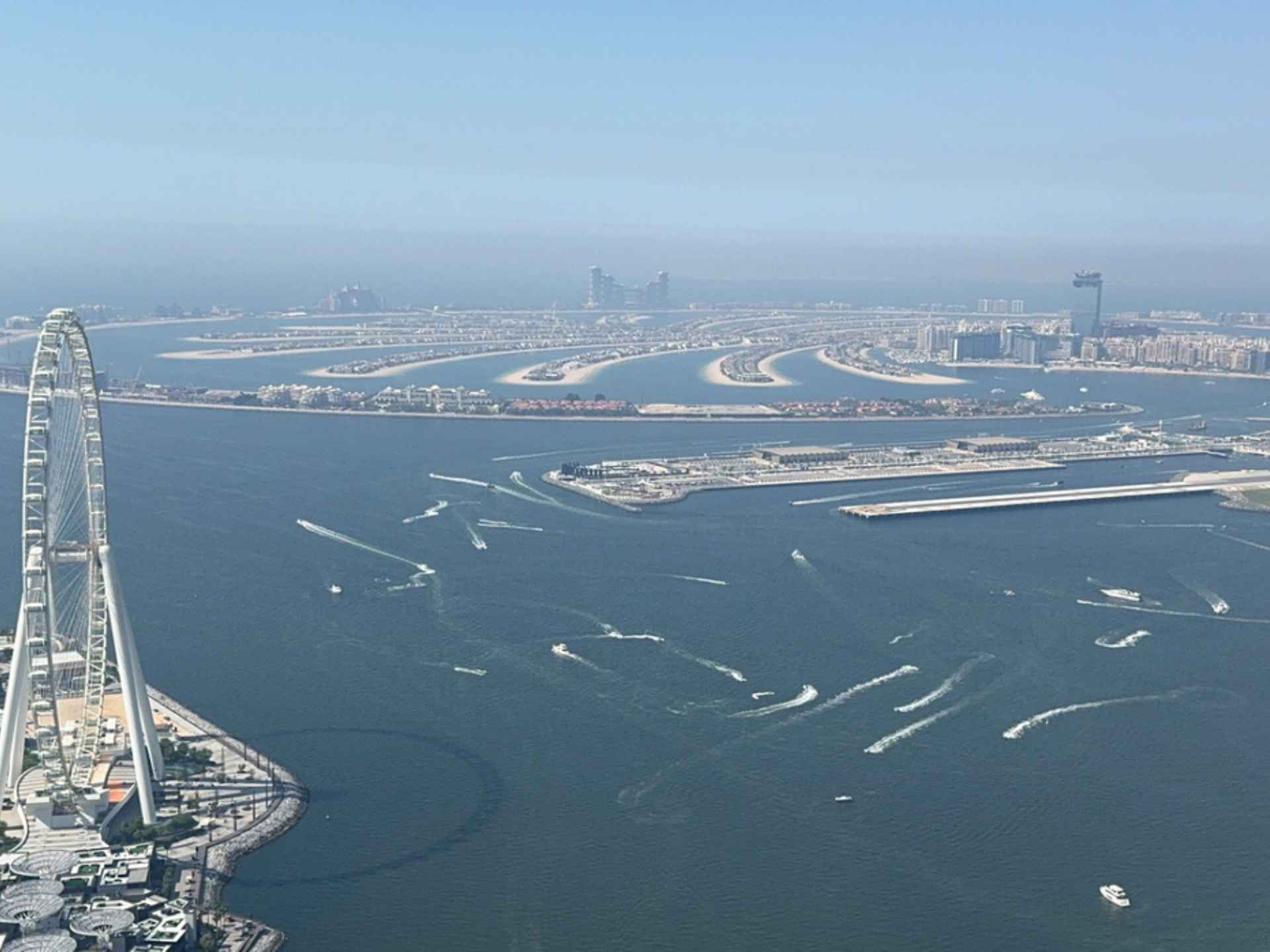
The Jumeirah coastline and Palm Jumeirah are where much of Dubai’s resort life happens. Jumeirah offers beachfront hotels, the landmark resorts around the Burj Al Arab and Madinat Jumeirah, and quieter residential streets of villas behind them. The Palm holds some of the city’s most prominent hotels alongside private villas on its fronds, and Jumeirah Bay Island has added a smaller and more secluded enclave. These areas suit clients who want the sea on their doorstep, but they sit at a real distance from DIFC and Downtown at peak hours, which should shape how a day is planned.
Emirates Hills, the Marina and the Newer Districts
Many families who spend long periods in Dubai live in its villa communities rather than its hotels. Emirates Hills is the most established of the prime villa addresses, and newer communities have extended that pattern inland. Dubai Marina and the beachfront beside it are denser, livelier and closer to the water. The city continues to grow quickly, and new districts, hotels and residences appear with regularity. A concierge working from a picture of Dubai that is several years old will miss a surprising amount.
Arriving: DXB, DWC and the Private Terminals
Dubai has two airports that matter to private clients, and the choice between them depends on the aircraft, the timing and where the client is staying.
| Airport | Character | Often suited to |
|---|---|---|
| Dubai International (DXB) | Major international hub close to the city, with VIP arrival services and a dedicated terminal for private aviation | Commercial arrivals and private flights heading to Downtown, DIFC or Deira |
| Al Maktoum International (DWC) | Airport in Dubai South with private aviation facilities, further from the city centre | Private flights, particularly for the Palm, the Marina, Emirates Hills or onward travel towards Abu Dhabi |
| Abu Dhabi International | The capital’s principal airport, roughly an hour and a half from central Dubai by road | Clients whose business or base is in Abu Dhabi, or when Dubai options are constrained |
For commercial travellers, a well-arranged VIP arrival service at DXB takes much of the friction out of what is otherwise one of the world’s busiest airports. For private flights, the choice between DXB and DWC is a genuine one. DXB is closer to the city, while DWC is often easier to operate from and can be the more practical option for the southern coastal districts. Dense early-morning fog occasionally affects flights during the cooler months, and peak holiday periods place considerable pressure on slots and ground handling. A good concierge will set out the realistic options for each journey rather than assuming the closest airport is always the best.
How Dubai’s Seasons Change the City
Dubai’s year is shaped by climate as much as by events. The cooler months bring the city to life, and the summer empties much of it. The occasions below are illustrations of how demand moves rather than a guide to Dubai’s calendar. The private side of the season, with its dinners, openings, family gatherings and invitation-only events, is at least as significant for many clients and rarely advertised.
| When | What happens | What changes across the city |
|---|---|---|
| October and November | The season begins; major exhibitions, trade events and sporting fixtures return, and the Abu Dhabi Grand Prix draws visitors across the UAE | Hotels fill quickly around large events, and business and leisure demand overlap |
| December and January | European holidays, Christmas and New Year, with New Year’s Eve in Downtown among the most demanding nights of the year | Villa and suite availability, restaurant tables, yachts and drivers are all under maximum pressure |
| February to April | The high season continues, with occasions such as Art Dubai and the Dubai World Cup at Meydan | Restaurants and hotels remain busy, and outdoor dining is at its best |
| May | Temperatures climb and the season winds down | Availability improves and many residents begin planning their summer departures |
| June to September | Intense heat; many residents leave, and outdoor life moves to early mornings and evenings | Rates and availability ease, while GCC holiday traffic and indoor venues carry the city |
The practical consequence is that a winter visit and a summer visit to Dubai are different undertakings. In December the difficulty is scarcity: the right villa, the right yacht and the right table all need planning well in advance. In August the difficulty is designing a stay that works around the heat, where venues and outdoor plans need rethinking rather than simply booking.
Ramadan, Eid and the Rhythm of the City
The Islamic calendar is lunar, so Ramadan and the two Eids move earlier each year relative to the Gregorian calendar. That alone catches out many international visitors who plan around a remembered month rather than the current year’s dates.
During Ramadan the rhythm of the city changes. Business hours may shift, daytime life can become quieter, and evenings take on a particular character around iftar and suhoor. Hotels, restaurants and private households may operate differently from the rest of the year, and international visitors benefit from understanding the customs of the period rather than treating it as an ordinary week in Dubai. A good concierge should know what has changed in that particular year and advise accordingly.
Eid brings a different pressure. Families from across the Gulf travel, and Dubai’s hotels, restaurants and flights can become very busy at short notice. For clients from the region, Eid is often the most important family occasion of their year. For international visitors, it is a period to plan around carefully rather than discover on arrival.
Villas, Staff and Longer Stays
A private villa is often the right choice for a family spending weeks rather than days in Dubai, particularly with children, extended family or household staff. A villa brings privacy, space and the ability to live as a household rather than as hotel guests. It also brings logistics a hotel handles invisibly: housekeeping, chefs, security, deliveries, pool and beach arrangements, and the family’s own staff travelling with them. Holiday homes and private rentals should be properly licensed and professionally managed, and a concierge should establish this before a family commits rather than after arrival.
Many families who own homes in Dubai divide their year between the city and elsewhere. Their arrival for the winter depends on the house being ready, which means staff briefed, systems checked, cars prepared and the household stocked to their preferences. That kind of continuity matters more than any single booking.
Chauffeurs are the backbone of a Dubai stay. Because distances are long and walking is impractical for much of the year, a family may rely on several drivers at once. The best know the city’s traffic patterns, which hotel entrances and villa communities have their own access arrangements, and how long each journey will genuinely take at that hour.
Yachts and the Water
Dubai’s coastline makes yachting part of everyday life for many private clients, from an afternoon off the Palm to an evening cruise past the Marina skyline. The main departure points include Dubai Marina, Dubai Harbour and marinas along the Jumeirah coast. The cooler months are the natural yachting season, but winter also brings the shamal, the northwesterly wind that can make the Gulf uncomfortable at short notice. A concierge should know when a planned day at sea is better moved, and which vessels and crews are suited to guests who are not seasoned sailors. As with villas, charter vessels and operators should be properly licensed, and the vessel should suit the occasion rather than simply the headline length.
Dubai and Abu Dhabi
Dubai is not the UAE, and many visitors to Dubai have reason to spend time in Abu Dhabi. The capital is the centre of federal government and much sovereign and institutional business. It has its own cultural district on Saadiyat Island, its own resorts, and Yas Island, home to the Abu Dhabi Grand Prix. The drive between the two cities takes around an hour and a half and is straightforward, but a day that involves a morning meeting in Abu Dhabi and an evening engagement on the Palm needs thought.
For clients with significant business in the capital, basing themselves in Abu Dhabi for part of a stay can be more sensible than commuting from Dubai. A concierge that knows Dubai well but treats Abu Dhabi as a day trip will serve those clients less well than one that understands both cities and how people move between them.
Private Life and Local Custom
Dubai is cosmopolitan and welcoming, and it also has clear expectations of public conduct. Visitors used to other cities occasionally misjudge them, and a concierge should be able to advise discreetly where it matters.
For many GCC families, much of their social life in Dubai is private and family-centred. It is organised around homes, majlis gatherings and trusted venues rather than public places. A concierge serving these clients needs to understand hospitality customs and discretion around family matters. It also needs to know the difference between what suits a family gathering and what suits a group of international business guests. The same restaurant, villa or yacht can be exactly right for one and quite wrong for the other.
What Visitors Commonly Misunderstand
Several Dubai realities surprise visitors with some regularity. Distances are far greater than the skyline suggests, and a base chosen for its view can add hours of driving across a stay. Winter peak weeks, particularly around Christmas and New Year, fill much earlier than many expect, while summer is not simply a cheaper version of winter but a different kind of visit. The dates of Ramadan and Eid change every year. The sea is not always calm in winter. And the city changes quickly: the restaurant everyone recommended last season may have been overtaken, and new districts, hotels and residences continue to appear. Local knowledge in Dubai has a shorter shelf life than in most cities, which is precisely why it matters.
What Separates an Exceptional Dubai Concierge
A Dubai concierge should know considerably more than which hotels are newest and which restaurants are fashionable this season. It should understand how the city’s geography shapes a stay, how the climate and the religious calendar change what is sensible, and how private life works for families from the Gulf as well as for visitors from further afield.
The real test is whether the concierge plans the stay as a whole. An arrival at DWC, a villa on the Palm, lunch in DIFC, a meeting in Abu Dhabi and an evening on the water cannot be treated as separate arrangements. Where the family is based, when each journey is made and what the weather is likely to do all affect the advice that should be given at the outset.
It should also know when to advise against something. In a city where almost anything can be offered, not everything offered is appropriate. Unlicensed rentals, poorly run charters and arrangements that ignore local expectations can all turn into real problems for a private client. A capable concierge understands these risks and will say so.
What a Global Concierge Adds in Dubai
For many private clients, Dubai is one part of a wider year. For some GCC families, Dubai forms part of a year that also includes extended periods in London or elsewhere in Europe. International families may keep a home in Dubai alongside others in Europe, the United States or Asia, and business travellers pass through repeatedly on their way between continents. In each case, the value of a concierge lies in carrying knowledge of the client from one place to the next. The same person should know the villa on the Palm, the house in Knightsbridge and the family’s preferences in both.
At Billionaire Concierge, each membership has one named Dedicated Lifestyle Manager, supported by a private team, and the client continues to deal with one person throughout the year. In Dubai that continuity has a particular practical value. The manager who knows when a family moves between its summer and winter homes can plan the transitions around Ramadan and Eid in any given year. The same manager knows how the household likes to be received and how much of the family’s social life is private, and can have the villa, the drivers and the staff ready before the season begins rather than after the family arrives.
Frequently Asked Questions
What is the best concierge service in Dubai?
There is no single answer for every client. The best concierge service in Dubai for a particular person understands the city’s geography and seasons, its aviation and villa logistics, and its customs and religious calendar, and can plan around the client’s own life there. For clients whose year extends beyond Dubai, it should also provide continuity elsewhere.
What should a Dubai concierge know?
A Dubai concierge should understand the city’s districts and how far apart they are in practice, the difference between arriving through DXB and DWC, how the seasons and Ramadan change the city, how villas, staff and yachts are arranged properly, and how Dubai relates to Abu Dhabi and the wider Gulf. Just as importantly, it should understand local customs well enough to guide clients discreetly.
When is the best time to visit Dubai?
The cooler months from late autumn to spring are the main season, with the greatest demand around Christmas, New Year and major events. Summer is intensely hot and much quieter, which suits some visits but requires a different kind of planning. The dates of Ramadan and Eid should always be checked for the year in question.
Should I fly private into DXB or DWC?
It depends on the aircraft, the timing and where you are staying. DXB is closer to the city centre, while DWC is further out and can be the more practical choice for some private flights, particularly towards the southern coastal districts or Abu Dhabi. A good concierge will compare both for the specific journey.
Is a villa better than a hotel in Dubai?
For short stays, Dubai’s leading hotels are hard to better. For longer stays, larger families or households travelling with staff, a properly managed private villa often offers more privacy and space. It also requires more coordination, which is where a concierge adds most value.
Do I need a separate concierge for Abu Dhabi?
Not if the concierge genuinely understands both cities and the region. Many clients move between Dubai and Abu Dhabi during the same stay, and the planning works best when one service understands the business, travel and lifestyle requirements of both.
Explore Billionaire Concierge
Billionaire Concierge is a global private concierge and lifestyle management company serving private clients, families and principals internationally. Established more than a decade ago, the service is built around continuity, discretion and personal accountability.
Every member has a Dedicated Lifestyle Manager supported by a private team and established global network, with support available worldwide, 24 hours a day, 365 days a year. From international travel and lifestyle management to sourcing, access and complex personal requirements, one trusted relationship takes responsibility from initial brief through to completion.
Services | Lifestyle Management | Membership | Corporate Concierge | Global Concierge | Contact